I’m Sarah, an Engineer, AI researcher, and Ph.D. candidate at the UC Berkeley School of Information (supervised by Professor Hany Farid). My research interests span signal processing, synthetic media detection, and digital forensics. My work has been featured at the Nobel Prize Summit, discussed at the White House and on NPR, recognized by the United Nations, and published in Nature Scientific Reports among other academic venues.
Previously, I graduated from the University of Cambridge, UK, with First Class Honors in General & Manufacturing Engineering (BA, MEng, MA), before working at McLaren Formula 1 as an Associate Engineer & Data Scientist in the Modeling & Decision Sciences function. I have since co-founded two technology start-ups, the latter of which was successfully acquired in 2019.
I am a Graduate Fellow at the Berkeley Risk and Security Lab, a Research Scholar at the Center for Long-Term Cybersecurity, and a UC Berkeley Fellowship Awardee. I have previously held the US-UK Fulbright Award for Data and Analytics, Scholarship Visionary of the Year award (IMechE), James Clayton Undergraduate Scholarship (IMechE), and both the Ann Jemima Clough and Eleanor Sidgwick Prizes for academic excellence and dissertation performance respectively (Newnham College, University of Cambridge).
Outside of academia: I am working towards my Private Pilot License, I climb and hike in beautiful places (including in Yosemite Valley!), and I try to go to as many Formula 1 races as I can. I also bake for a wonderful local charity called Cake4Kids. And by the way… I am British, with the accent to match!
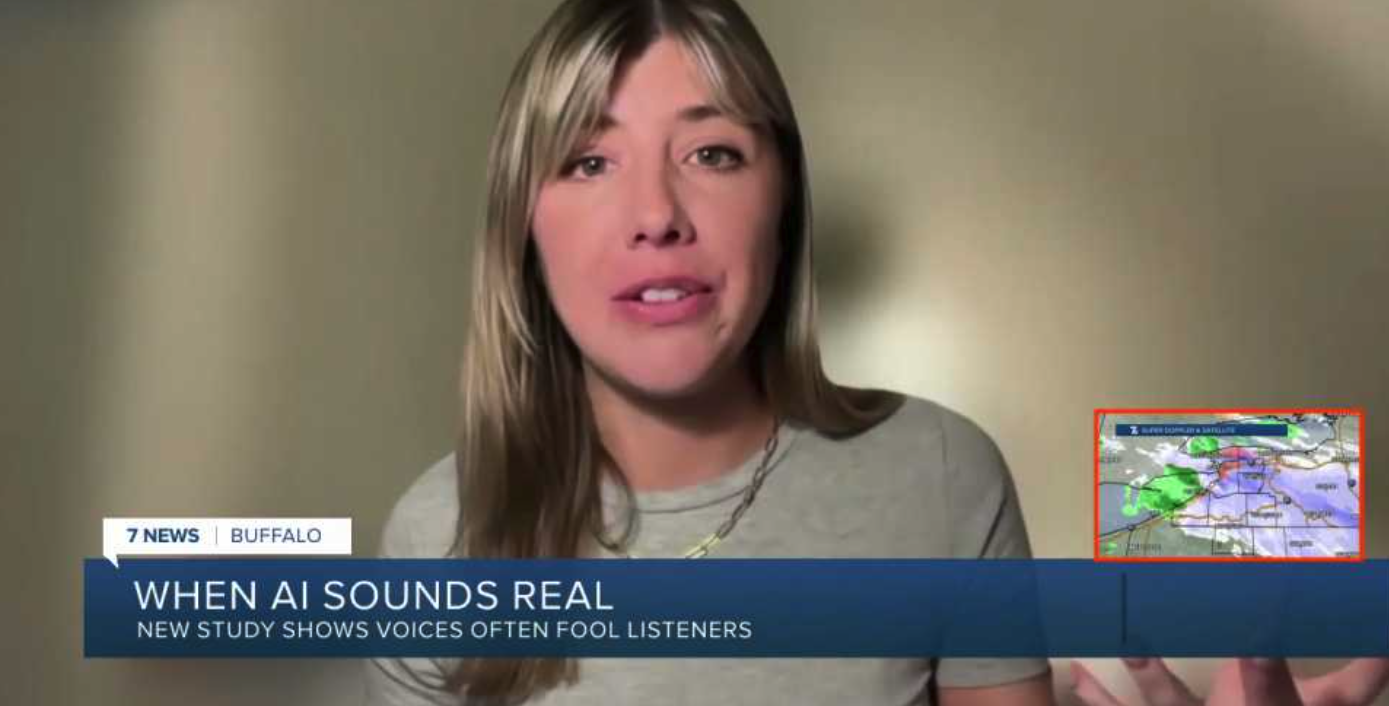
In our latest study, humans perceived the identity of an AI-generated voice to be the same as its real counterpart 80% of the time. So what do we do about it? I was glad to talk to WKBW-TV ABC News about the common scams people are experiencing every day through these technologies and how we can look out for them.
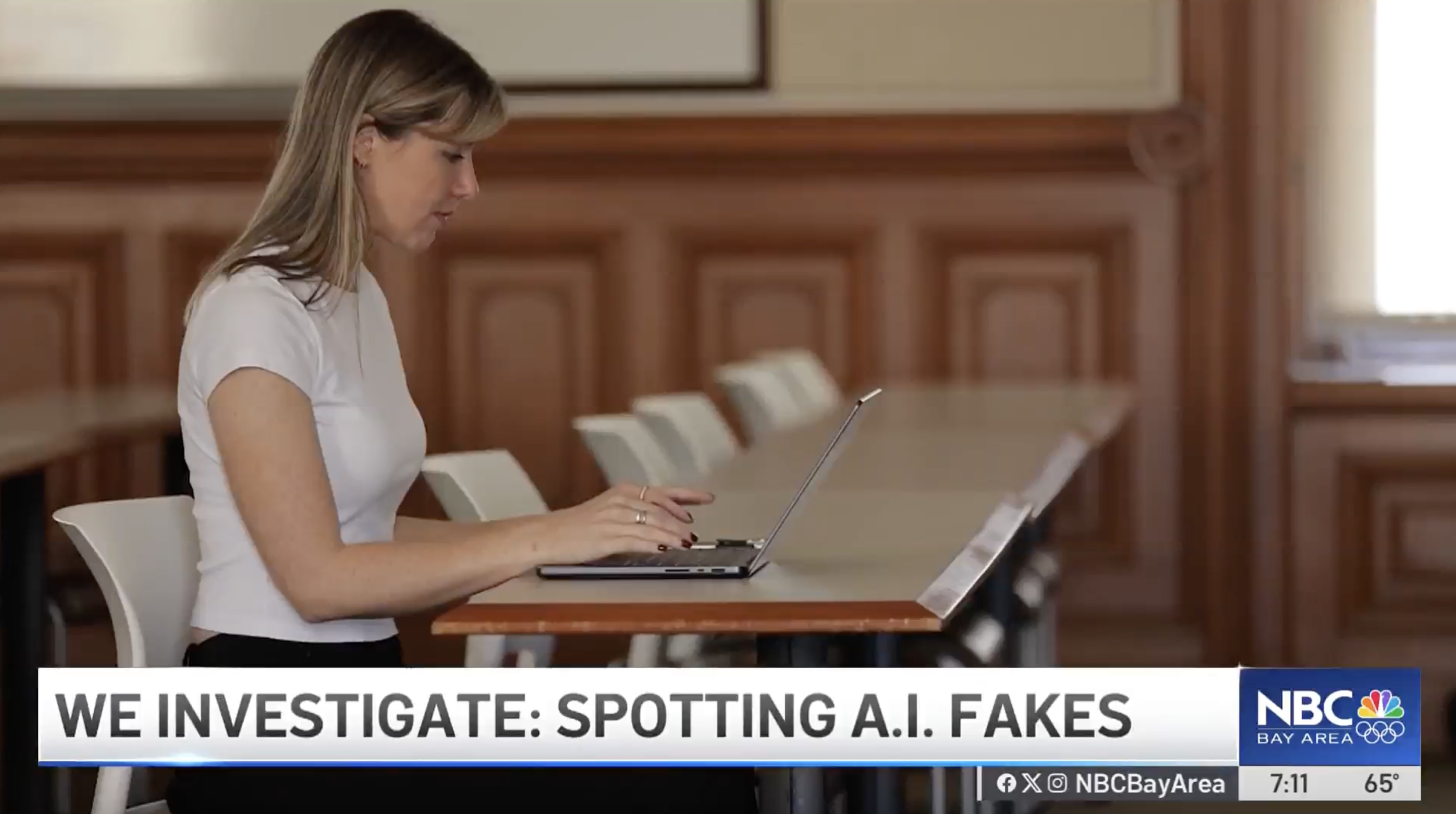
Our audio deepfakes study on NBC News! An absolute pleasure to sit down with Senior Investigative Reporter, Bigad Shaban (who, by the way, is awesome to work with), and discuss all thing deepfakes and AI-powered voice clones, and the post-truth era. Bigad even tried to do the same 'real vs. fake' voice quiz that we gave to our study participants and did no better than guessing!
Is generative AI too new or unprecendented to regulate? In my latest article published in Tech Policy Press, I argue ‘no’. While some elements of generative AI are genuinely new, and the inner workings of these models are extremely complex, the harms it enables are evolutions of those we have seen before.
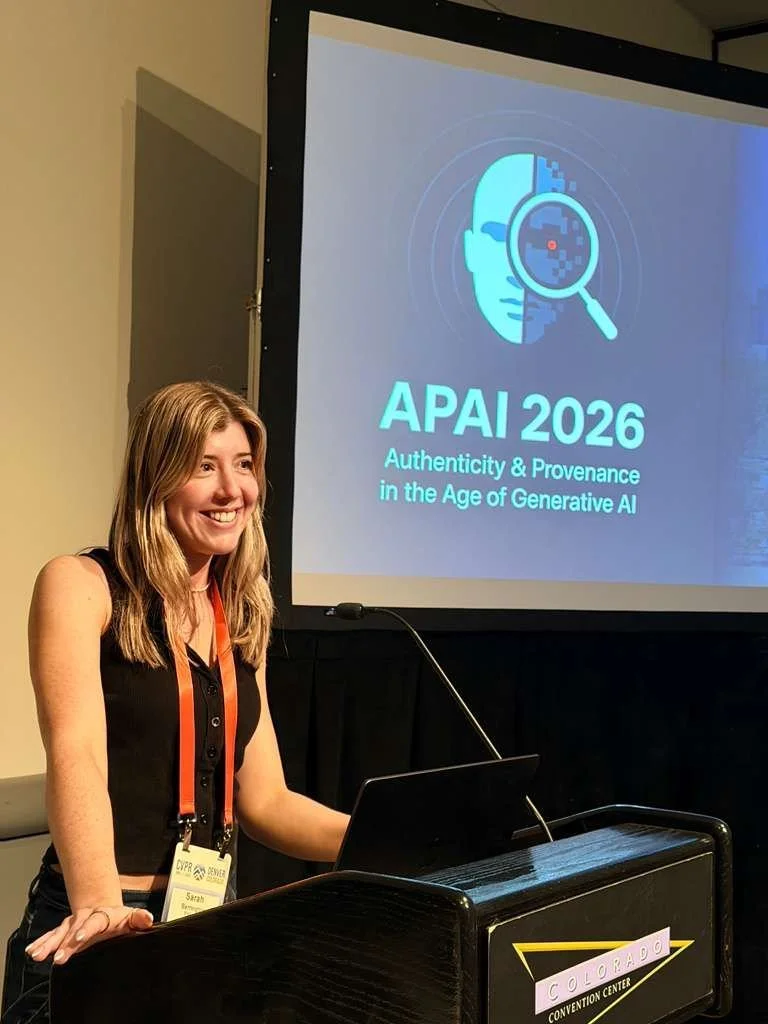
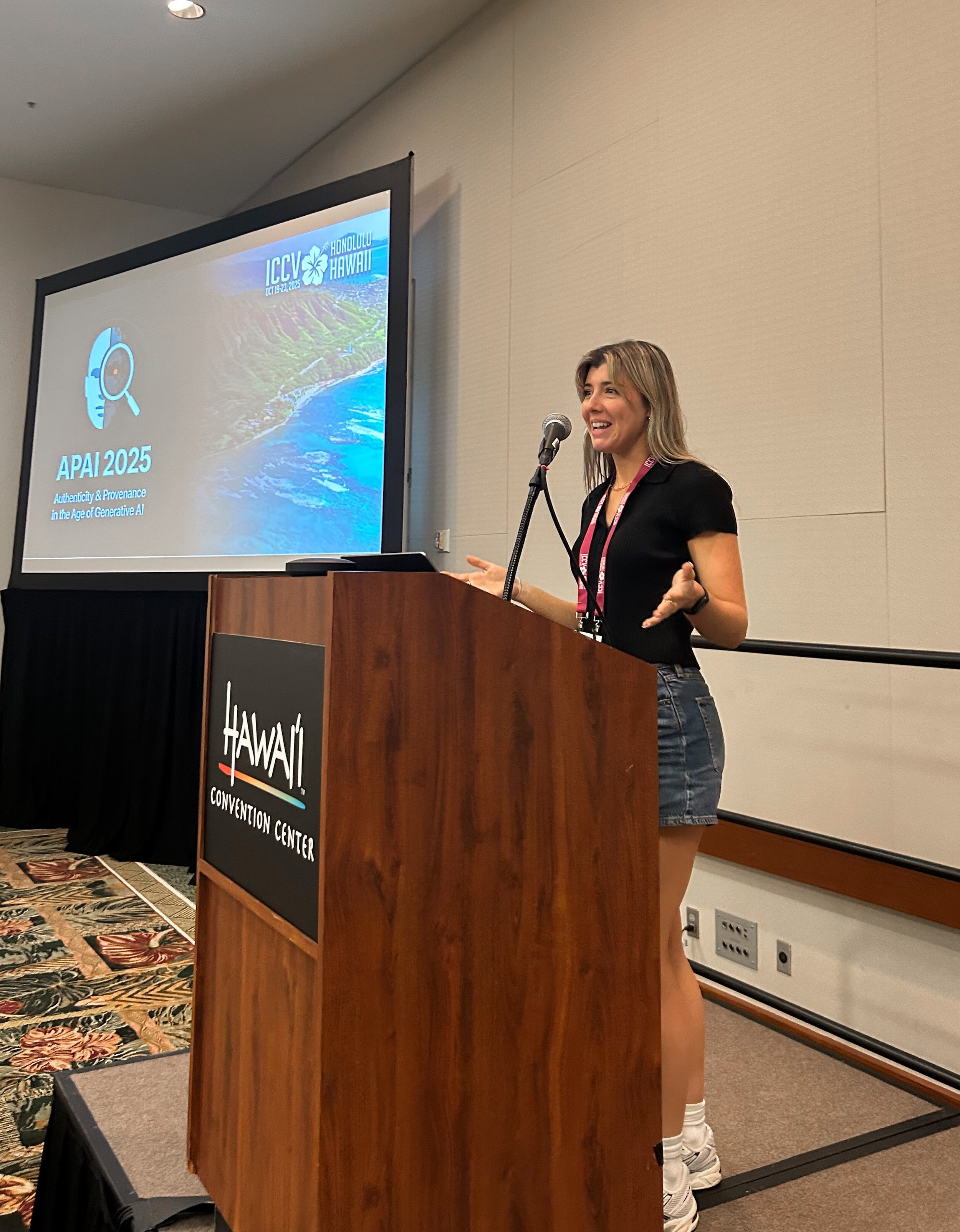
Hosted our Authenticity & Provenance in the Age of generative AI (APAI) workshop at ICCV25 in Honolulu this year. Had a fantastic range of papers and talks, from watermarking NeRFs to semantically-aligned VLM-based deepfake detection; and many great entries to our SAFE Synthetic Video Detection Challenge 2025.
My PhD advisor, Professor Hany Farid, gave a fantastic Ted talk about what our lab does. Highly recommended watch.
Hany Farid, Emily Cooper and Rebecca Wexler - who happen to be three of my favorite academics of all time EVER - authored an article about our work on AI voice clones and what this means in a court of law.
The Royal Academy of Engineering did a very kind profile on me for the Ingenia magazine.
The article can be found here: https://www.ingenia.org.uk/articles/qa-sarah-barrington-phd-student-studying-ai-harms-and-deepfakes/. Thank you to Jasmine Wragg for coordinating, and Florence Downs for being so lovely to work with!
Out in Nature Portfolio SciReports today, our work on detecting AI-powered voice clones. TL;DR: AI-generated voices are nearly indistinguishable from human voices. Listeners could only spot a 'fake' 60% of the time. By comparison, randomly guessing gets 50% accuracy.
LinkedIn // GitHub // Google Scholar // Email // Academic
Berkeley, California // London, United Kingdom